
Chimney Caps vs. Crowns vs. Covers
Chimney protection is crucial for safety and longevity. Three main components offer protection that people get confused about: the chimney caps, the crown, and the chimney cover. They all serve protective roles, but they’re very different in how they’re designed, what their purpose is, and how important they are.
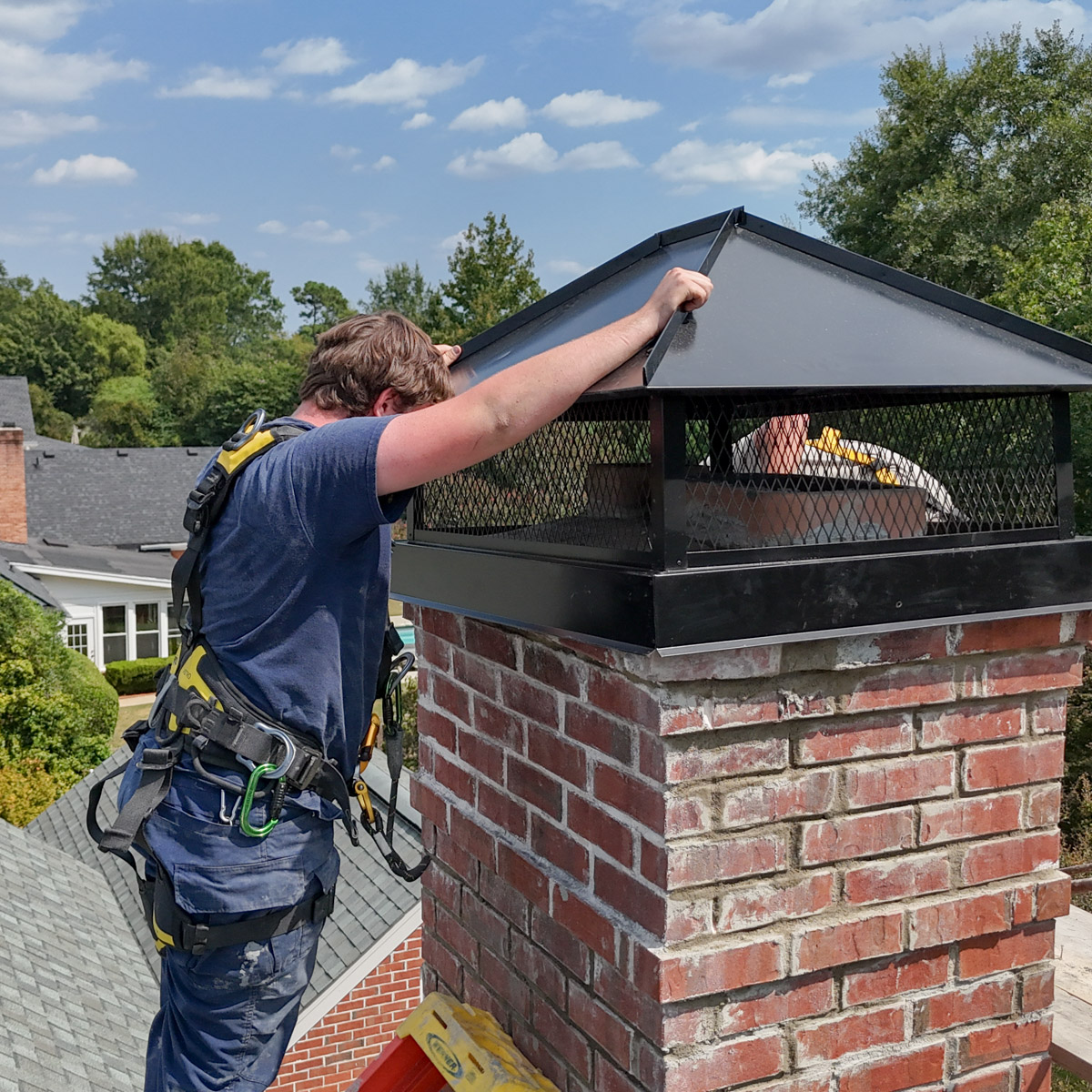
Knowing how each one works can help you prevent costly damage and extend your chimney’s lifespan.
What is a Chimney Cap?
A chimney cap is a metal fixture installed at the top of the chimney flue. Caps are typically made of stainless steel, copper, or galvanized metal. They look like a little roof over the flue opening.
The main purpose of the cap is protection. They prevent rainwater from entering the flue, which is critical because moisture is a leading cause of chimney deterioration. They also serve as a barrier against critters like birds, squirrels, and raccoons that like to nest in the chimney.
Another important benefit is spark protection. Many caps include a mesh screen that helps contain embers and sparks, reducing the risk of roof fires, which is helpful if you have a wood-burning fireplace.
Without a cap, your flue is wide open to the elements, making it vulnerable to water damage, blockages, and downdrafts that push smoke back into the home.
What is a Chimney Crown?
People often confuse crowns with caps, but crowns serve a completely different purpose.
Think of the crown as the first line of defense for the masonry. Its job is to direct water away from the chimney’s bricks and mortar. A properly constructed crown has a slight slope that allows rainwater to run off rather than pool.
If the crown is cracked or poorly built, water can seep into the masonry below. Over time, this leads to issues such as spalling bricks, deteriorating mortar joints, and, eventually, structural instability. In colder climates, freeze-thaw cycles can worsen the damage.
Unlike caps, which are relatively easy to install and replace, repairing a crown often requires professional masonry work. That’s why keeping the crown in good condition is recommended for long-term chimney health.
What are Chimney Covers?
The term “chimney cover” can be confusing because it’s sometimes used interchangeably with “cap.” However, it can also refer to more extensive protection systems, such as top-sealing dampers or full-width chimney covers.
A top-sealing damper, for instance, acts as a cap and a damper. It sits at the top of the chimney and creates an airtight seal when the fireplace isn’t in use. This helps improve energy efficiency by preventing heated or cold air from escaping the home.
Full chimney covers, on the other hand, are larger metal structures designed to cover multiple flues or the entire chimney top. These are commonly used on chimneys with more than one flue or when extra protection from severe weather is required.
 Covers provide increased protection against water ingress and debris falling in, but they’re typically more specialized and may not be necessary for every home.
Do You Need All Three?
Sometimes yes and sometimes no. Every chimney should have a crown and cap because they are essential for protecting against water intrusion, animals, and debris. If you don’t have multiple flues, you may not need a cover, but you can always check with a local professional for their recommendation.
Contact Advanced Chimney Sweep to Schedule Your Spring Chimney Sweeping
Spring is here, and it’s the best time to call our professionals to clear the soot and creosote from last winter’s chimney. We can also inspect the chimney and flue to check for damage before it worsens. We also sell, install, and service stoves, inserts, and fireplaces. Contact us today!